Best Non GamStop Casino UK 2026
Loading...
Why You Need to Calculate Before You Claim
The number on the promotional banner tells you what the casino is offering. The number from a wagering calculation tells you what the casino is actually costing you. These are different figures, and the gap between them is where most players lose money they didn’t need to lose.
A wagering calculator translates the abstract terms of a bonus — 35x wagering, 96% RTP, 30-day expiry — into concrete outputs: how much you need to bet, how long it will take, and how much you can expect to lose during the process. These outputs are the basis for an informed decision. Without them, you’re evaluating a financial commitment using the casino’s marketing language rather than the underlying maths, and marketing language is specifically designed to emphasise the attractive parts of the offer while minimising the costly ones.
The calculation takes less than a minute. The inputs are readily available — the casino is legally required to disclose the wagering requirement and game contribution rates, and RTP figures are published for every licensed game. The arithmetic is multiplication and subtraction at a secondary-school level. There’s no reason not to run the numbers, and every reason to do so: the result might confirm that the bonus is worth claiming, or it might reveal that the offer you were about to commit £200 to would cost you more than it returns.
Players who calculate before claiming make systematically better decisions. They avoid high-wagering offers that look generous but deliver negative expected value. They identify low-wagering offers that other players overlook because the headline match percentage is modest. They choose games with better RTPs for wagering, reducing the cost of every bonus they claim. And they set realistic expectations for the outcome, which means they’re less likely to chase losses when the wagering cycle doesn’t go as hoped. The calculator isn’t a guarantee of profit — no tool can promise that in a game of chance. It’s a guarantee of clarity, which is the next best thing.
How to Use a Wagering Calculator
A wagering calculator — whether it’s a dedicated online tool, a spreadsheet, or mental arithmetic — requires four inputs and produces three outputs. Master the inputs and the outputs follow automatically.
Input one: the bonus amount. This is the amount credited to your bonus balance after depositing. On a 100% match with a £50 deposit, the bonus amount is £50. On a 50% match with a £100 deposit, the bonus amount is also £50. The match percentage and your deposit determine this figure, but the calculator only needs the result.
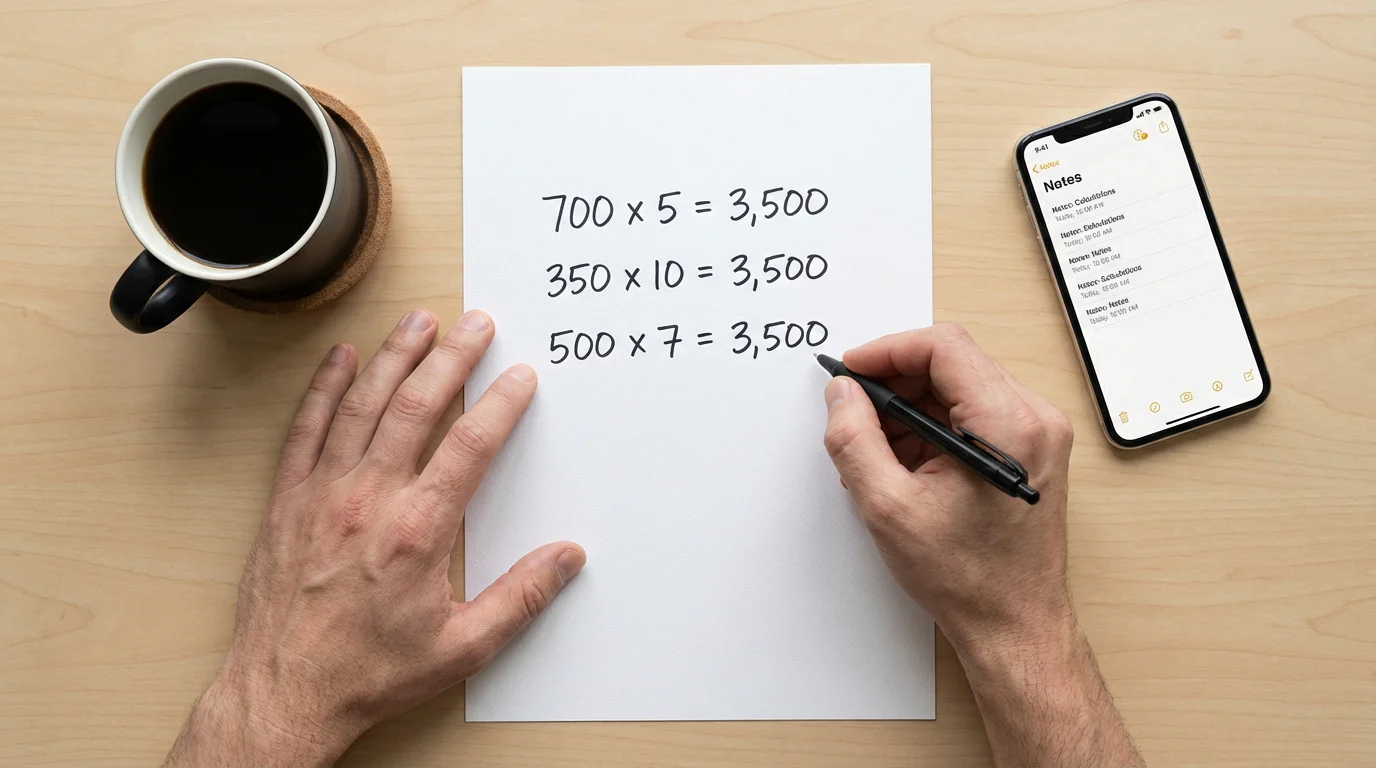
Input two: the wagering multiplier and its base. The multiplier is the number stated in the terms — 20x, 35x, 50x. The base tells you what the multiplier applies to. “Bonus only” means the multiplier applies to the bonus amount alone. “Bonus plus deposit” means the multiplier applies to the combined total of your deposit and the bonus. A 35x bonus-only requirement on a £50 bonus means £1,750 in wagering. A 35x bonus-plus-deposit requirement on a £50 bonus and £50 deposit means £3,500. The base doubles the wagering when it includes the deposit, so confirming which version applies is essential before entering the numbers.
Input three: the game RTP. This is the return-to-player percentage of the game you intend to play during wagering. For slots, it’s published on the game’s information page or in the casino’s help section. The house edge is 100% minus the RTP: a 96% RTP slot has a 4% house edge. A 97% RTP slot has a 3% house edge. Use the RTP of the specific game you’ll play, not a generic average.
Input four: the game contribution rate. If you’re playing slots at 100% contribution, this input doesn’t change anything — nominal wagering equals effective wagering. If you’re playing a game with less than 100% contribution, divide the total wagering by the contribution rate to get the effective wagering. £1,750 at 50% contribution becomes £3,500 in actual bets.
Output one: total wagering. This is the total amount you need to bet. For slots at 100% contribution, it’s bonus multiplied by wagering multiplier. For other games, adjust by the contribution rate.
Output two: expected wagering cost. Multiply the total wagering by the house edge (as a decimal). £1,750 in wagering at 4% house edge costs £70 in expected losses. This is the price of clearing the bonus.
Output three: expected value. Subtract the wagering cost from the bonus amount. £50 bonus minus £70 wagering cost equals -£20 expected value. Negative means the bonus costs more than it provides. Positive means it provides more than it costs. Zero means breakeven.
That’s the complete calculation. Four inputs, three outputs, one decision. If the expected value is positive or close to zero and the total wagering volume fits within your time and budget constraints, claim the bonus. If the expected value is significantly negative, or the wagering volume requires more play than you’re comfortable committing, skip it. The calculator gives you the numbers; you supply the judgement about whether those numbers align with your goals.
Worked Examples With Common UK Offers
Running the calculator on three representative UK bonus types demonstrates how the same simple formula produces dramatically different verdicts depending on the terms.
A mid-range deposit match: 100% up to £100 at 35x wagering, bonus only, played on a 96% RTP slot at 100% contribution. Bonus amount: £100. Total wagering: £100 multiplied by 35 = £3,500. House edge: 0.04. Expected wagering cost: £3,500 multiplied by 0.04 = £140. Expected value: £100 minus £140 = -£40. Verdict: negative. The bonus costs £40 more than it provides. This is a standard result for a 35x offer on typical slots — not disastrous, but clearly negative. A player who claims this bonus should expect to finish the cycle roughly £40 worse off than if they’d played without the bonus. Variance might push the outcome in either direction, but the mathematical expectation is a loss.
A competitive low-wagering match: 100% up to £75 at 15x wagering, bonus only, played on a 97% RTP slot at 100% contribution. Bonus amount: £75. Total wagering: £75 multiplied by 15 = £1,125. House edge: 0.03. Expected wagering cost: £1,125 multiplied by 0.03 = £33.75. Expected value: £75 minus £33.75 = +£41.25. Verdict: positive. The bonus delivers over £41 in expected value — genuine, measurable profit on average. The lower wagering requirement and higher-RTP game combine to keep the cost well below the bonus value. This is the kind of offer worth actively seeking out, and it illustrates why wagering multipliers below 20x consistently produce favourable outcomes on standard slots.
A no-deposit free spins offer: 30 spins at £0.10 on a 95% RTP slot, winnings subject to 60x wagering, played through on a 96% RTP slot at 100% contribution. Step one — calculate spin winnings: 30 multiplied by £0.10 multiplied by 0.95 = £2.85 in expected winnings. Step two — calculate wagering on those winnings: £2.85 multiplied by 60 = £171. Step three — calculate wagering cost: £171 multiplied by 0.04 = £6.84. Step four — expected value: £2.85 minus £6.84 = -£3.99. Verdict: negative. The spins themselves produce under £3 in expected winnings, and the wagering to convert those winnings to cash costs nearly £7. The net result is a loss of roughly £4 — not from your pocket (since there’s no deposit), but in the sense that the offer has no expected monetary value. Its value is experiential, not financial.
Building Your Own Quick Calculation
You don’t need a website or an app to run this calculation. You need the ability to multiply two numbers and subtract one from another. Once you’ve done it three or four times, the process becomes automatic — a reflex that activates every time you see a bonus offer, the way checking the price tag is a reflex when you pick up a product in a shop.
The mental shortcut for slot players is the 4% rule. Take the bonus amount, multiply it by the wagering requirement, and multiply the result by 0.04. That’s your approximate wagering cost on standard 96% RTP slots. If the cost is more than the bonus, the offer is negative. If it’s less, the offer is positive. You can do this in your head for any bonus with a round number: £50 at 30x = £1,500 in wagering. £1,500 multiplied by 0.04 = £60 cost. £50 bonus minus £60 cost = -£10. Negative. Takes about five seconds once you’re practised.
For players who prefer a physical record, a simple table in a notebook or phone note works well. Create columns for: casino name, bonus amount, wagering multiplier, total wagering, game RTP, wagering cost, and expected value. Fill in each row as you evaluate offers. Over time, the table becomes a personal database of bonus evaluations that you can reference when an offer reappears or when comparing current options to past claims.
A spreadsheet adds automation. Set up a single sheet with input cells for bonus amount, wagering multiplier, wagering base (bonus only or bonus plus deposit), deposit amount, game RTP, and game contribution rate. The output cells calculate total wagering, effective wagering (adjusted for contribution), wagering cost, and expected value using the formulas described above. Once the sheet is built, evaluating a new offer takes thirty seconds — enter the four or five inputs, read the expected value. The spreadsheet also makes it easy to test scenarios: “What if I play a 97% RTP slot instead of 96%?” or “What if I deposit half the maximum qualifying amount?”
Whichever method you use — mental arithmetic, notebook, or spreadsheet — the discipline of calculating before claiming is the single most valuable habit a bonus player can develop. It converts every promotional page from an emotional appeal into a quantifiable proposition. Some propositions will be worth accepting. Many won’t. The calculation tells you which is which, and it does so with more accuracy and less bias than any comparison site, forum recommendation, or gut feeling. The bonus industry relies on the majority of players never running these numbers. The minority who do are the ones who consistently make better decisions.